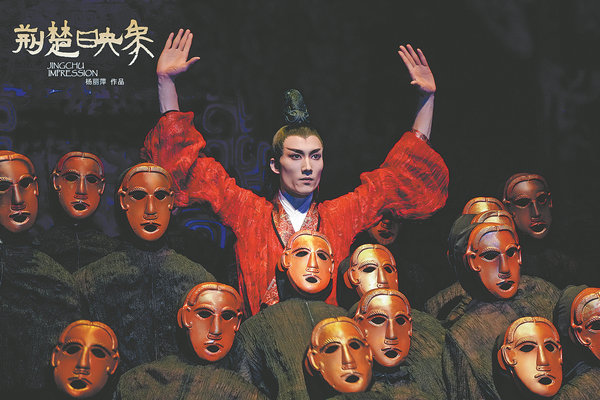
Dance Drama 'Jingchu Impression'
Introduction
"Jingchu Impression" is an original dance drama that encapsulates the rich heritage and mythological essence of the Chu culture, a vital component of Chinese civilization that prospered over two millennia ago. Under the expert direction of the celebrated dancer and choreographer Yang Liping, this production showcases the beauty and romance of Chu.
The music, composed by the internationally acclaimed Tan Dun, further enhances the theatrical experience, creating an immersive cultural showcase.
Having debuted in Shanghai as part of the 23rd China Shanghai International Arts Festival in October 2024, the dance drama offers a profound exploration of the Chu culture, introducing audiences to the legendary works of Qu Yuan, a pivotal figure in this cultural tapestry.
Themes and Storyline
Main Themes
At the heart of "Jingchu Impression" is the celebration and exploration of Chu culture, deeply intertwined with the poetic legacy of Qu Yuan. This dance drama delves into themes of mythology, romance and patriotism, offering a narrative that spans the mystical and the historical. Through the lens of Qu Yuan's poetry, the production explores the existential queries and emotional depths of the poet's works. Furthermore, it touches upon the universal themes of love, sorrow and the human condition, presenting them through the artistic medium of dance and music.
Plot Summary
"Jingchu Impression" unfolds in four chapters, each inspired by one of Qu Yuan's classic poems. The storyline follows the life and experiences of Qu Yuan, weaving through tales of mythological figures and historical heroes from the Chu state during the Warring States Period (475-221 BC).
The narrative offers a blend of mystery, passion, romance and conflict. Each chapter paints a vivid picture of the cultural richness of Chu, with characters brought to life by the expressive performances of the dancers. The dance drama succeeds in capturing the essence of Qu Yuan's emotional journey, inviting audiences to partake in a historical exploration that is both enchanting and enlightening.
Production Elements
Choreography
The choreography of "Jingchu Impression" is a testament to Yang Liping's artistic prowess, merging traditional techniques with innovative expressions.
Young dancers, such as Dong Chonghan and Cheng Peiying, embody their roles with exceptional skill and creativity. Dong's portrayal of a spirit of the mountain, inspired by Qu Yuan's poem "Shan Gui" (The Mountain Spirit), is particularly noteworthy. Despite traditionally being a female character, Dong's performance blurs gender lines, presenting the spirit as a pure and ethereal fairy. Cheng's depiction of the Phoenix showcases her unique physicality, using her wide shoulders to create a distinctive portrayal.
Music and Soundtrack
The soundtrack of "Jingchu Impression", composed by Tan Dun, is an integral component of the production, enhancing the narrative with its rich auditory textures.
The use of "bianzhong", or bronze chime bells, symbolizes the cultural heritage of Chu, adding an authentic historical layer to the music. The play's musical arrangements also incorporate other traditional Chinese art forms, such as opera and shadow puppetry, creating a diverse and dynamic soundscape. This fusion of sounds serves not only to complement the visual elements of the dance drama but also to transport the audience into the ancient world of Chu culture, making the production an auditory feast.
Costume and Set Design
The visual artistry of "Jingchu Impression" is further enriched by its costume and set designs, crafted meticulously to reflect the historical and cultural context of the narrative. The production team has invested significant effort in creating elaborate costumes that embody the characters' essences and the era they represent.
Stage sets are designed to evoke the mystical landscapes of ancient Hubei, transporting the audience to the mythical realms of Qu Yuan's poetry. The combination of lighting effects and set design enhances the overall atmosphere, creating an immersive environment that captivates the senses. This attention to detail in the visual elements not only complements the choreography and music but also elevates the production to a holistic artistic experience, celebrating the enduring charm of traditional Chinese culture.








